
Opera Company of Middlebury presents…
Verdi’s LA TRAVIATA
directed by Douglas Anderson
conducted by Filippo Ciabatti
Meet the cast!
Performances: June 5, June 7, June 11, June 13, 2026
Under the age of 26? Check out our Opera Under 26 program to learn how to get free tickets to the opera!
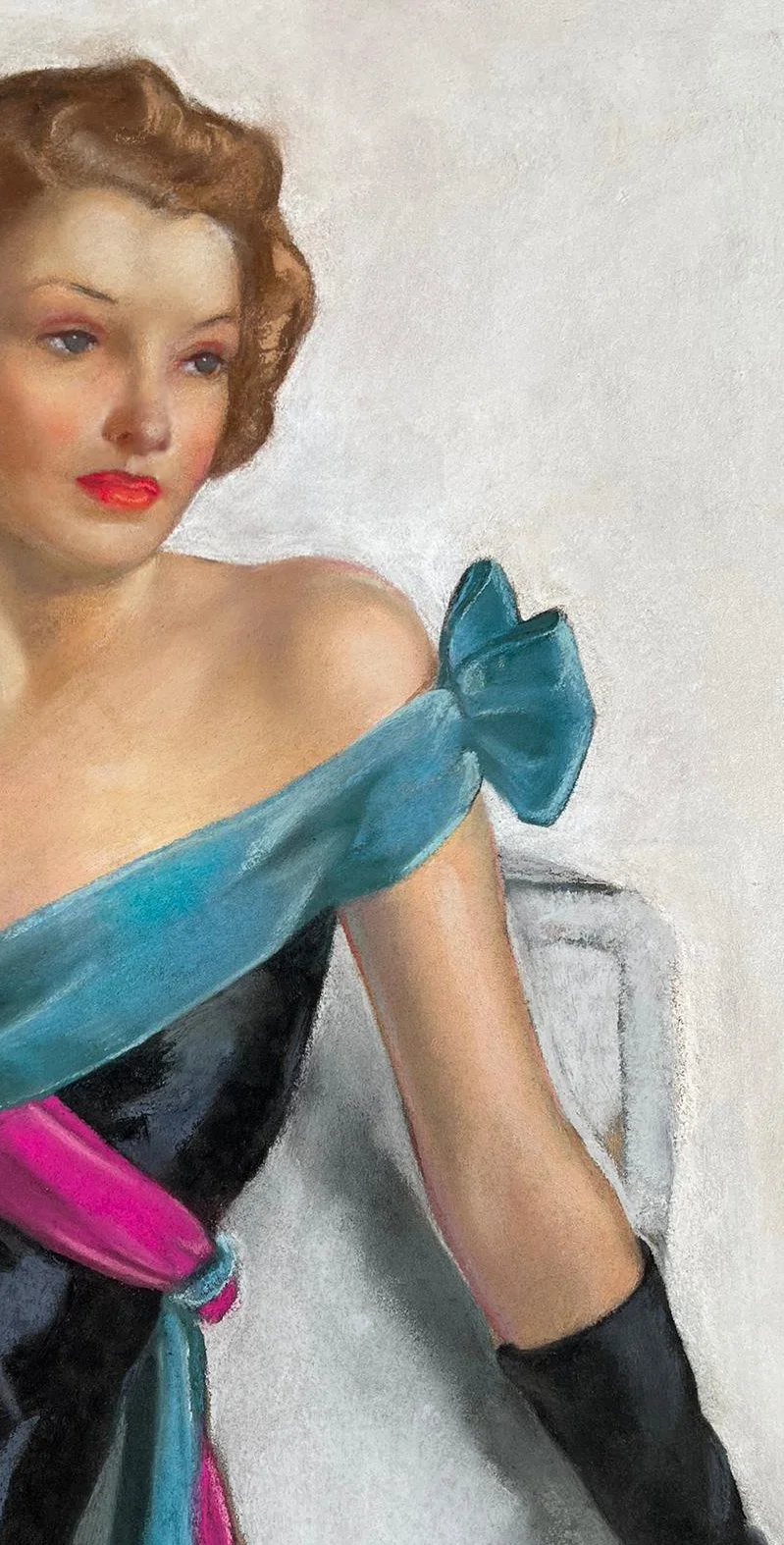
Director Douglas Anderson has set his production in the 1920s. “Verdi set the opera in the 1700s, but Violetta has always seemed to me to be a very contemporary woman, taking control of her life and refusing to be hemmed in by social norms or the men surrounding her.” Anderson chose the 1920s because it was the first moment in American history when women challenged social norms.“They broke every taboo,” says Anderson, “wearing short skirts, cutting their hair, drinking and smoking in public. They wanted to shock the world out of its Victorian complacency.” Costumer Debby Anderson has worked closely with husband Doug to clothe the singers in vibrant period gowns. “It’s a sexy, outrageous period. You get the feeling that the world is changing, that anything can happen.”
Anderson believes that if La Traviata is a tragedy, it isn’t because Violetta becomes ill. “It’s because the men in her life can’t begin to deal with this new woman. In a famous aria, she sings, 'Sempre libera' – ‘I will always be free.’ The men in La Traviata make sure that doesn’t happen."
LA TRAVIATA
staged by Artistic Director Douglas Anderson with orchestra conducted by Music Director Filippo Ciabatti
Under the age of 26? Check out our Opera Under 26 program to learn how to get free tickets to the opera!
FRIDAY, JUNE 5 – OPENING NIGHT + PROSECCO RECEPTION
6:30 pm – Pre-Show talk with OCM Music Director, Maestro Filippo Ciabatti
7:30 pm – LA TRAVIATA, Town Hall Theater, Middlebury
Post Performance – Prosecco Celebration: Open to all, light refreshments served, Prosecco available for 21+, N/A option available.
SUNDAY, JUNE 7 – MATINEE
1:00 pm – Pre-Show talk with Middlebury College Professor and OCM Board member Dr. Danielle Simon
2:00 pm – LA TRAVIATA,Town Hall Theater, Middlebury
THURSDAY, JUNE 11
6:30 pm – Pre-Show talk with Middlebury College Professor and OCM Board member Dr. Danielle Simon
7:30 pm – LA TRAVIATA,Town Hall Theater, Middlebury
SATURDAY, JUNE 13 – MATINEE
1:00 pm – Pre-Show talk with OCM Artistic Director and La Traviata Stage Director Douglas Anderson
2:00 pm – LA TRAVIATA,Town Hall Theater, Middlebury
LA TRAVIATA Cast
Violetta Valéry - Avery Boettcher
Alfredo Germont - Jared Esguerra
Giorgio Germont - Andrew Manea
Baron Douphol - Nicholas Tocci
Doctor Grenvil - Matthew Soibelman, YAP
Annina - Alexandra Wiebe, YAP
Flora Bervoix - Luisana Rivas, YAP
Gastone de Letorières - Dylan Schang, YAP
Marquis d'Obigny - Will Kim, YAP
Giuseppe - Cameron Steinmetz
Flora's Friend - Nessa Rabin
Messenger - Neil Wacek
Chorus
Chorus Master: Nathaniel Lew
Soprano
Hayley Abramowitz, YAP
Inga Maevskaya
Zoë Mickle
Shikta Mukherjee, YAP
Wanda Sullivan
Bre Valdez
Mezzo-Soprano
Estefani Lopez, YAP
Francesca Napolitano
Nessa Rabin
Orchestra
Violin
Brooke Quiggins, Concertmaster
Vlad Hontilǎ, Assistant Concertmaster
Marcia Cassidy, Principal Second
Mary Gibson
Adda Kridler
Jane Kittredge
Melanie Dexter
Paula Oakes
Ben Lively
Viola
Stefanie Taylor, Principal
Carrol Lee
Ana Ruesink
Cello
John Dunlop, Principal
Sam Quiggins
Bass
Nick Browne, Principal
Tenor
Brian Clancy
Matt DeDiana
Ajit Persaud, YAP
Cameron Steinmetz
Basses
Yuri Alekhin
Bryan Bennet, YAP
Neil Wacek
Flute / Piccolo
Melanie Williams, Principal
Oboe
Michelle Farah, Principal
Clarinet
Kelli O’Connor, Principal
Chris Howard
Bassoon
Janet Polk, Principal
Horn
Patrick Kennelly, Principal
Joy Worland
Trumpet
Elizabeth Jewell, Principal
Bass Trombone
Zachary Haas, Principal
Timpani / Percussion
Michael Caterisano, Principal
Conductor: Filippo Ciabatti
Orchestra Contractor: Mary Gerbi
LA TRAVIATA Synopsis
La Traviata (The Fallen Woman) • Music by Giuseppe Verdi • Libretto by Francesco Piave
La Traviata was the third opera in what could be called Verdi’s ‘breakout year,’ 1852-53. Preceding it, in quick succession, had been Rigoletto and Il Trovatore. Indeed Verdi was writing both Trovatore and Traviata at the same time in spite of the fact that their stories and music could not have been more different. Traviata was inspired by Verdi seeing Alexandre Dumas’ 1851 play La Dame aux Camélias(The Lady of the Camellias). What made Traviata so different in its time was that it treated a contemporary subject, among the very first to do so in opera. Indeed, when the opera was premièred in Venice the management of the Teatro La Fenice in Venice insisted it be set in the early 1700s because they were sure that the contemporary subject and costumes would offend its audiences’ sensibilities, as they were used to operas set in historical times. The first performance was a fiasco. But a year later it was produced again (still set in the 1700s) to wild acclaim. It was not until almost forty years later, though, that the opera was produced in contemporary dress and by then the 1850s seemed a generation removed and the subject a little less shocking.
ROLES:
Violetta Valéry, soprano, a courtesan
Flora Bervoix, mezzo-soprano, her rich friend
Annina, soprano, Violetta’s maid
Baron Douphol, baritone, Violetta’s protector
Alfredo Germont, tenor, a young man
Giorgio Germont, baritone, his father
Gastone, Viscount de Letorières, tenor
Marquis D'Obigny, bass
Dottor Grenvil, bass
Act I
Paris. A salon in the house of fashionable courtesan, Violetta Valéry, where a party is in progress. Alfredo is introduced as an admirer. While guests dance, Violetta is beset by a fit of violent coughing and Alfredo attends to her. He urges her to abandon her wanton life. The guests leave and Violetta muses about Alfredo’s urging, ‘A fors’è lui.’ But she shrugs it off and launches into a somewhat hysterical expression of joy in her present life, ‘Sempre libera.’
Act II
Scene I, a country house where Violetta and Alfredo have been living together. Alfredo learns Violetta has been selling her possessions to support them, ‘De’ miei bollenti spiriti,’ and he rushes to Paris to get money to help them. His father, Giorgio Germont, arrives and tells Violetta that her son’s scandalous affair with her will ruin his younger sister’s chance to wed, ‘Pura siccome un angelo.’ She agrees to renounce Alfredo, ‘Dite alla giovine.’ Alfredo returns and Violetta tells him she must leave for a while. After she is gone a letter arrives telling him that she has resumed her relationship with a rich patron, Baron Douphol. Germont comforts his son by singing of their old home in Provence, ‘Di Provenza il mar, il suol.’
Scene II, a salon in Flora’s palace. A party in progress. Alfredo arrives, followed by Violetta and Baron Douphol. Alfred wins handily at cards and then throws the money at Violetta’s feet, proclaiming that he has repaid his debt to her. Alfredo’s father arrives and a chaotic finale ensues in which various strong passions are expressed by all.
Act III
Violetta’s bedroom. Although Dottor Grenvil expresses optimism, Violetta knows she is going to die of consumption. She reads a letter from Alfredo’s father telling her that Alfredo has fled abroad after wounding Baron Douphol in a duel, but that he is hurrying back to be with her to ask her forgiveness. Knowing she has only a few hours to live she appeals to God’s mercy, ‘Addio, del passato.’ Alfredo enters, the two lovers dream of escaping Paris in health and happiness, ‘Parigi, o cara.’ But Violetta collapses and both realize she is on the point of death. Alfredo’s father arrives and asks forgiveness for the suffering he has caused. Violetta dies.
Written by J. Scott Morrison, former OCM Board member

SUPPORT THE OPERA COMPANY OF MIDDLEBURY
Your contributions bring life to our stage. Thank you for supporting independently produced opera in Vermont!